01
One score, explained in place
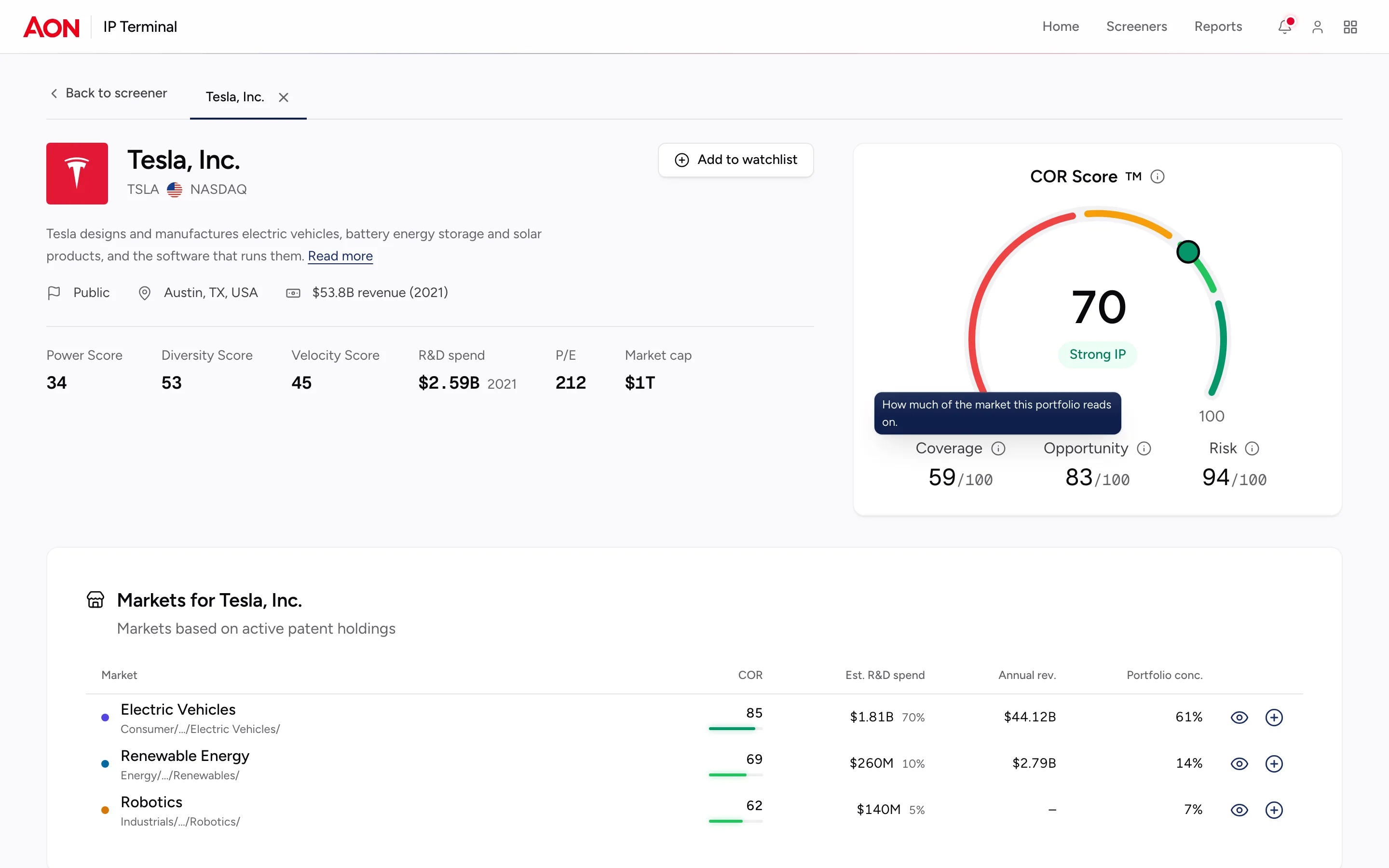
The COR score rates Tesla’s portfolio 70 out of 100: Strong IP. Coverage, Opportunity and Risk sit under the gauge, and each info icon explains its part in a tooltip, right where you are reading.
(01) IP & risk suite / Investor research
A Bloomberg terminal for patents.
IP Terminal is a research terminal for patents as an asset class. Watchlists and screeners lead into company and market detail for investment, acquisition and portfolio calls. I owned the product design, contributed to the Vue front end, and rebuilt it here as a working app.
Open the app01
The COR score rates Tesla’s portfolio 70 out of 100: Strong IP. Coverage, Opportunity and Risk sit under the gauge, and each info icon explains its part in a tooltip, right where you are reading.
02
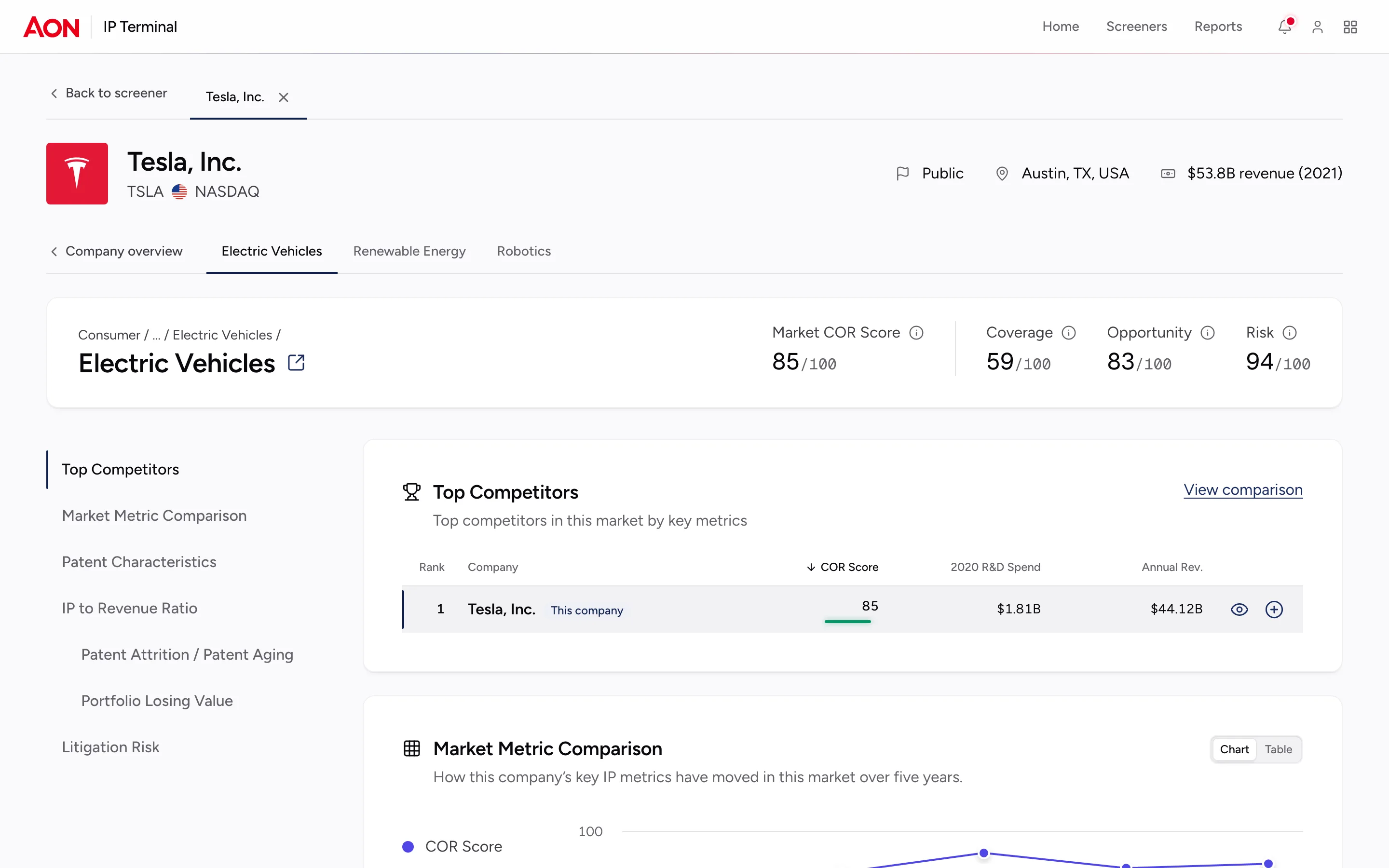
A tab per market turns the company page into one company inside one market. Tesla scores 85 in Electric Vehicles and 62 in Robotics, with its rivals ranked in each.
03
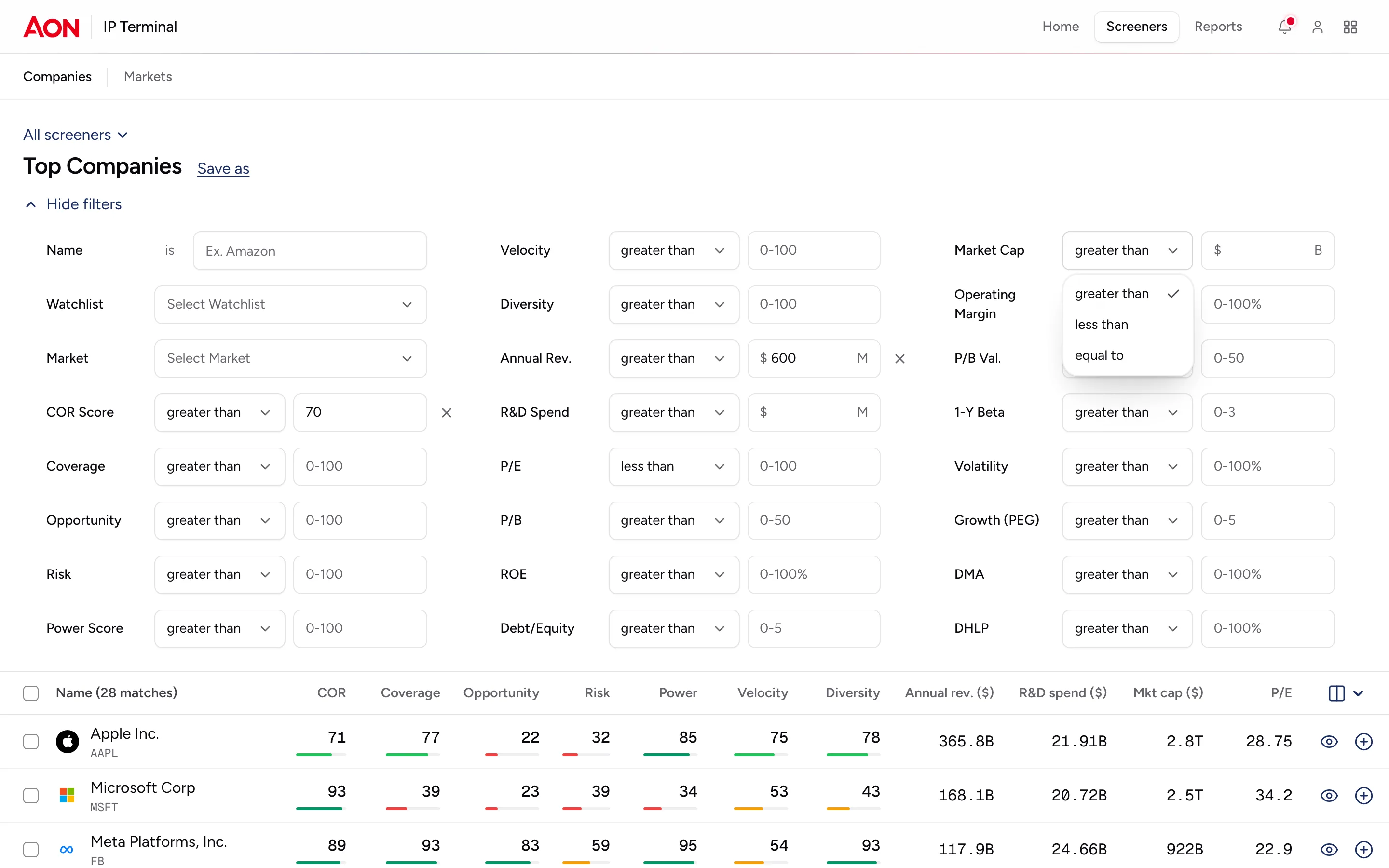
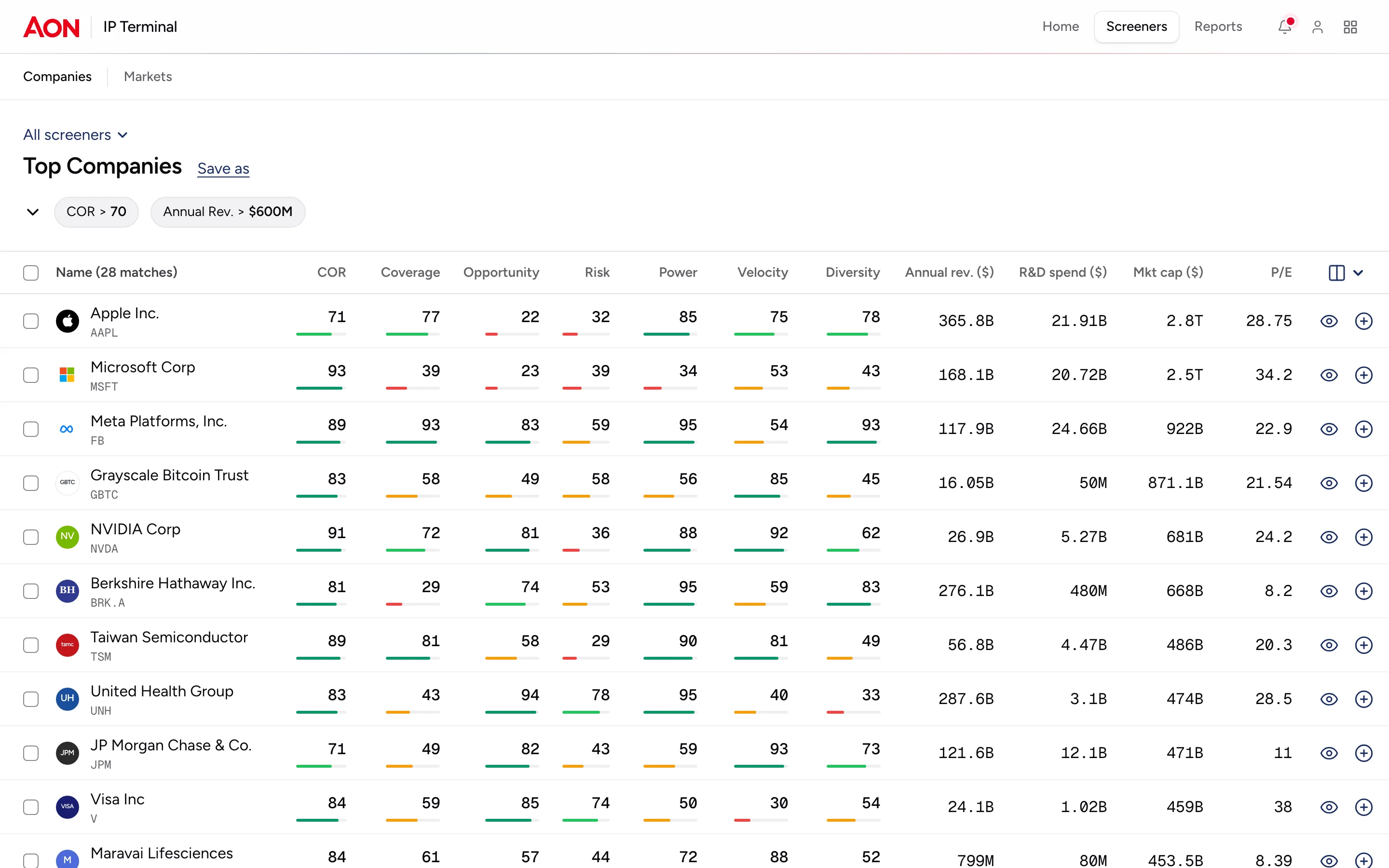
Strong IP at a modest size: a COR above 70 and a market cap under $100B narrows 28 companies to six. Applied filters fold into chips, and every score carries a coloured bar so 93 and 39 never look alike.
Design noteEach score gets a thin bar in one of four colour bands, red to deep green, with a soft glow. Clicking a chip flashes a halo on its filter row.
04
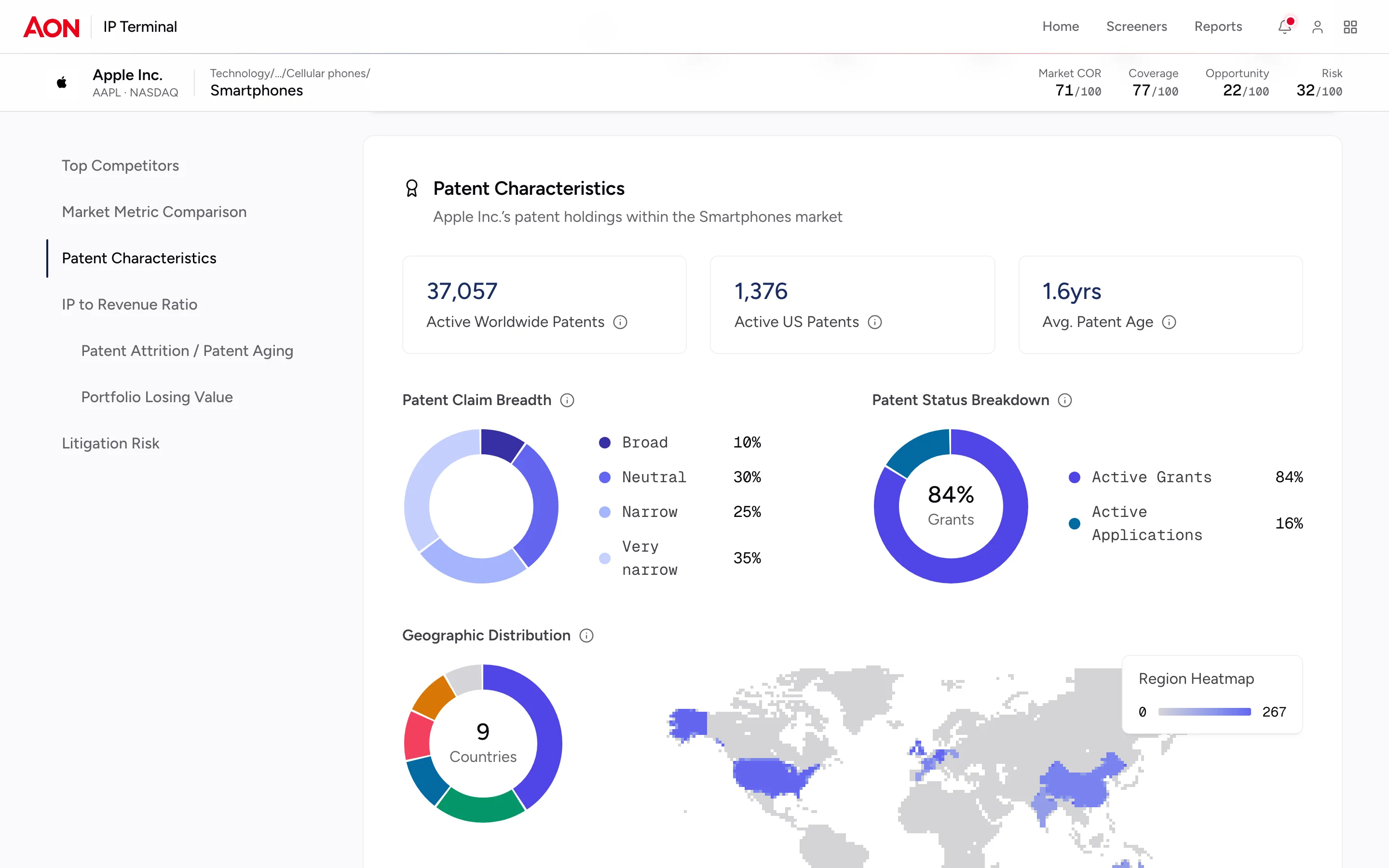
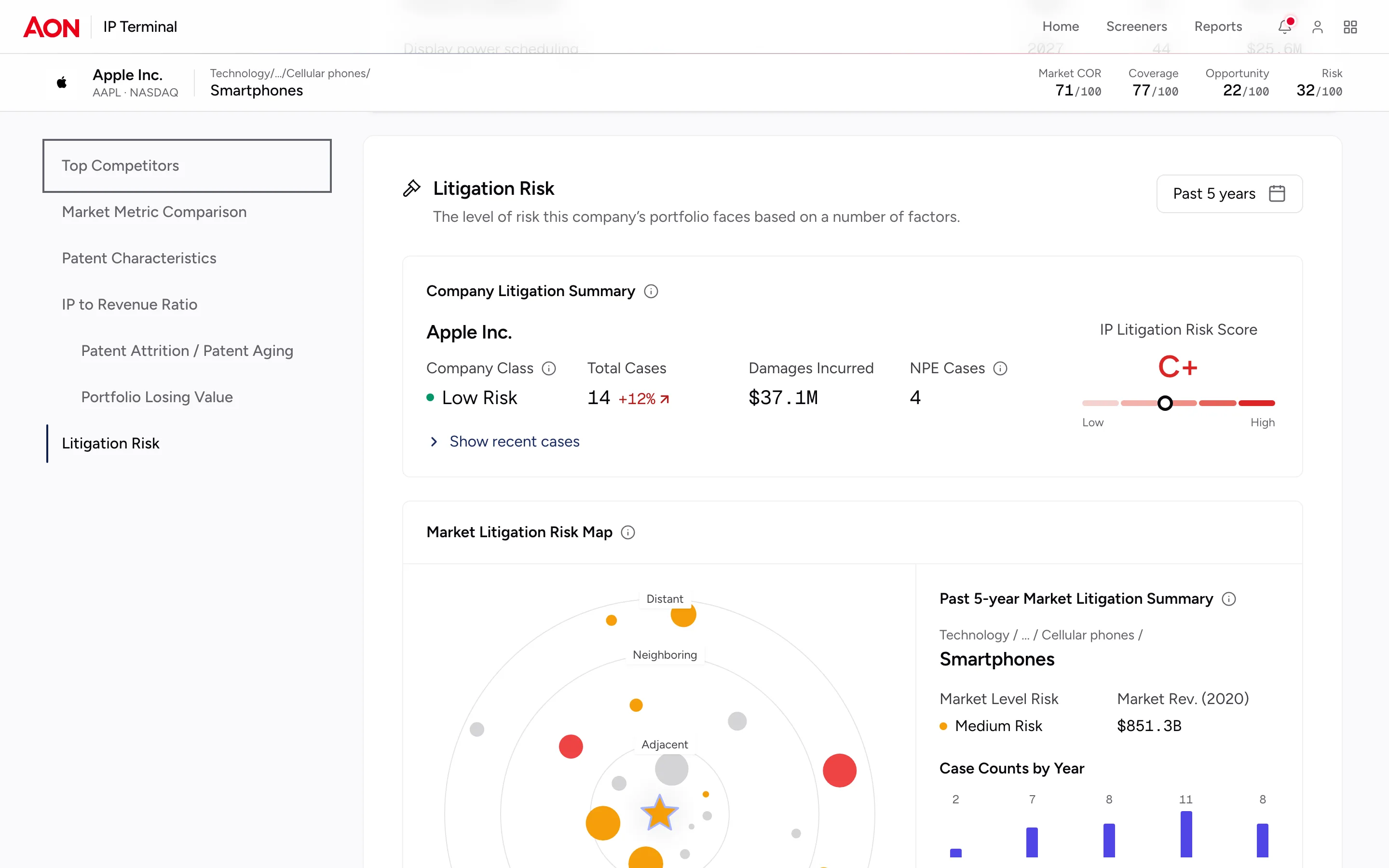
Apple in Smartphones, ranked against Samsung, Qualcomm and Huawei across seven views, from patent age to litigation risk. A slim summary bar keeps Apple’s scores pinned while the charts scroll by.
Design noteThe summary bar is frosted glass that fades in only once the header scrolls under the app bar. Its scores are small mono figures in tabular numerals.
05
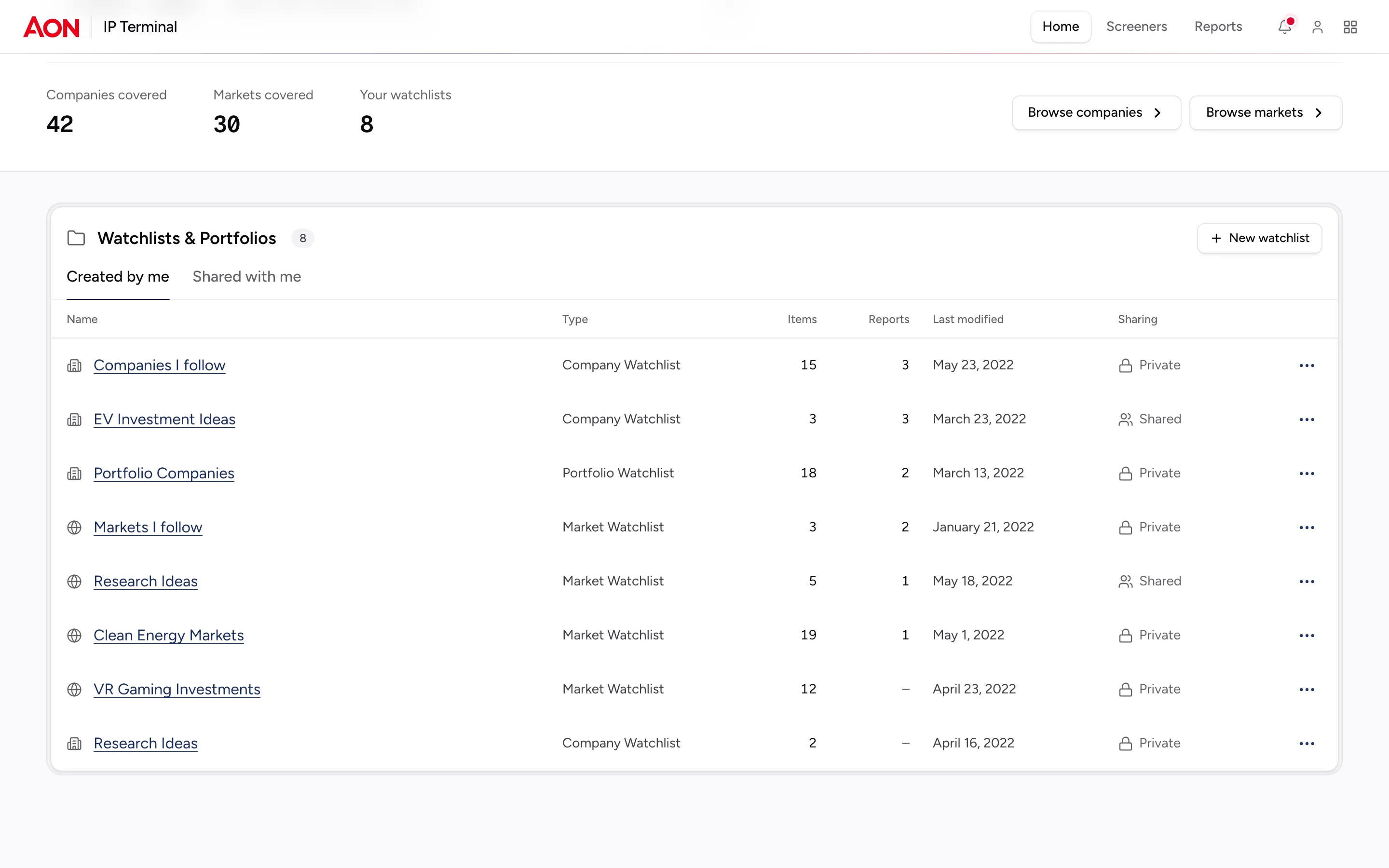
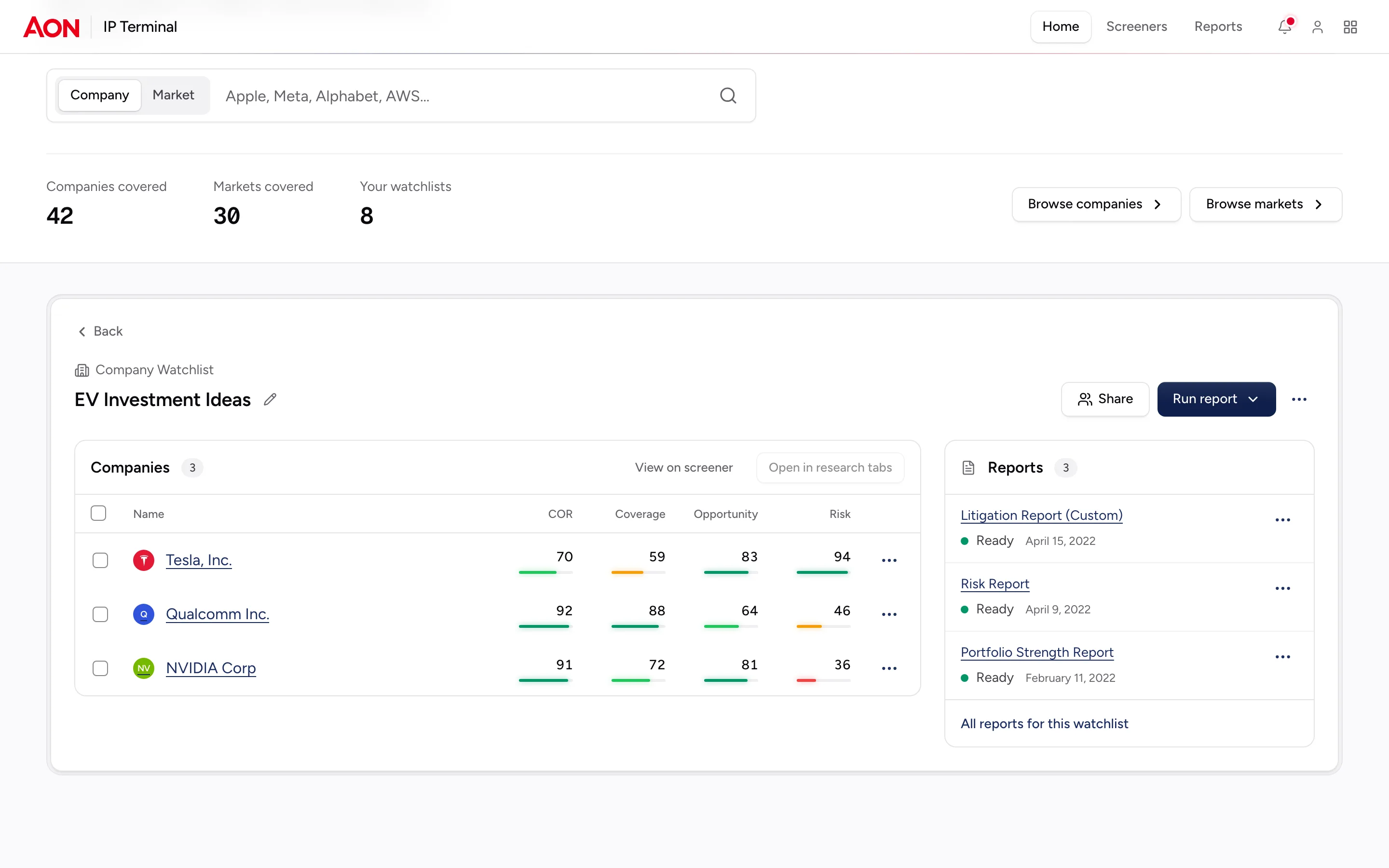
Run any of four reports on EV Investment Ideas from its card, then share it. A colleague sees the list and every report run on it, and the table marks it Shared.
Design system
Neutral zinc surfaces with one navy accent; colour is spent on data and state.
Figtree
Most companies and investors could barely see which patents a company held, let alone what they were worth. Answers lived in spreadsheets and analyst requests, and every question needed an in-house expert. Our group was building machine learning and analytics to do that work at scale.
Two groups needed it: investors valuing companies by their IP, and businesses tracking competitors and acquisition targets. I mapped the information architecture first, from a market overview down to a single company, and tested it with stakeholders, our analysts and customers before designing a screen.
The analytics behind it made Aon’s first IP-backed loan possible, with a company’s patents as the collateral. IP Terminal put that analysis into a SaaS product, a Bloomberg terminal for IP assets, and it won our first enterprise clients.
This was a zero-to-one product, so we judged it by whether it solved the right problem. User testing, stakeholder reviews and customer demos told us that.
Next project
Vendor Verification →